


Many people notice that certain foods make them feel unwell.
It might be bloating after dairy, a rash after seafood or fatigue after certain meals. These reactions are often grouped under the label of “food allergy,” but medically, not all food reactions are the same.
In reality, there is an important distinction between food allergy and food sensitivity (or intolerance). Understanding this difference is essential—not only for managing symptoms safely, but also for avoiding unnecessary dietary restrictions.
In recent years, there has also been growing confusion around food testing, particularly with widely marketed tests that may not always reflect true allergies.
If you’ve ever wondered whether a food reaction is something serious—or whether testing is needed—this guide will help clarify what matters.
Key Takeaways
- Food allergies involve the immune system and can be serious
- Food sensitivities are usually digestive or metabolic reactions
- Not all food tests are clinically validated
- Accurate diagnosis prevents unnecessary dietary restriction
What Is a Food Allergy?
A food allergy occurs when the immune system mistakenly identifies a food protein as harmful.
This triggers an immune response involving IgE antibodies, which activate mast cells and release histamine.
What is an IgE-mediated food allergy?
An IgE-mediated food allergy is a rapid immune reaction that occurs when the body produces IgE antibodies against specific food proteins, leading to symptoms such as hives, swelling or breathing difficulty.
Common symptoms include:
- Hives or itching
- Swelling of the lips, face or throat
- Vomiting or abdominal pain
- Breathing difficulty
These symptoms typically occur within minutes to a few hours after eating the food.
In severe cases, food allergies can cause anaphylaxis, which requires urgent medical attention.
What Is Food Sensitivity or Intolerance?
Food sensitivity (or intolerance) does not involve the immune system in the same way.
Instead, symptoms are usually related to:
- Difficulty digesting certain foods
- Enzyme deficiencies (e.g. lactose intolerance)
- Reactions to food components such as caffeine or additives
Common symptoms include:
- Bloating
- Gas or abdominal discomfort
- Diarrhoea
- Headaches or fatigue
Symptoms are often delayed and less predictable, sometimes appearing hours after eating.
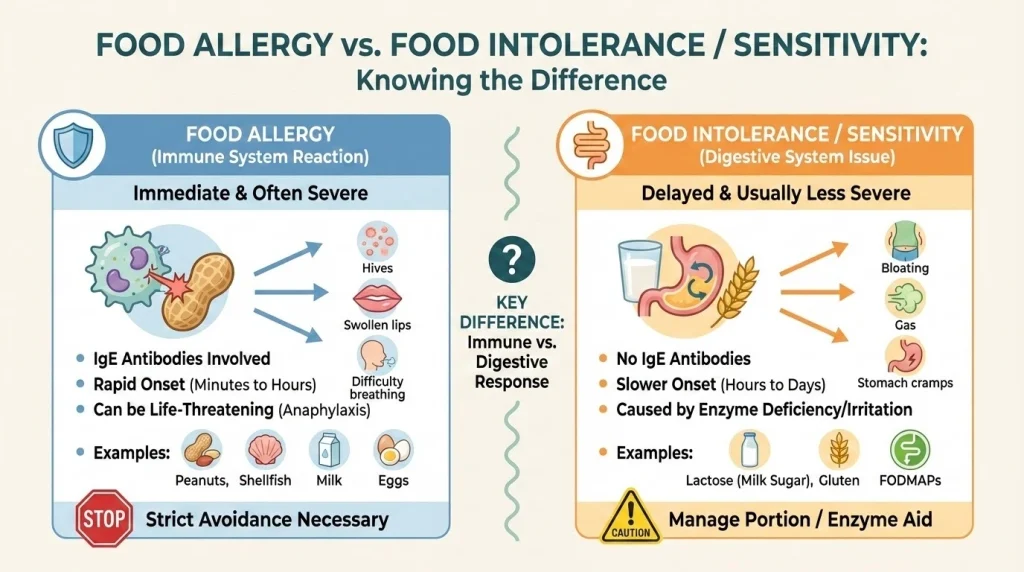
Food Allergy vs Food Sensitivity: Key Differences
| Food Allergy | Food Sensitivity | |
| Immune involvement | Yes (IgE-mediated) | No |
| Onset | Rapid (minutes to hours) | Delayed |
| Symptoms | Hives, swelling, breathing issues | Digestive discomfort, fatigue |
| Severity | Can be severe or life-threatening | Usually mild to moderate |
| Testing | Validated allergy tests available | Limited validated tests |
Symptom → Concern → What It May Mean
What Patients Often Notice
- “I feel bloated after certain foods”
- “I get rashes sometimes after eating seafood”
- “I did a food test and it showed many ‘intolerances’”
What This May Suggest
Digestive symptoms → Likely intolerance
Immediate skin or swelling reactions → Possible allergy
Multiple “positive” food results → May not reflect true allergy
When Further Evaluation is Helpful
- Reactions involving hives or swelling
- Breathing symptoms
- Repeated reactions to specific foods
- Confusion after non-standard testing
If symptoms are unclear or inconsistent, a structured medical evaluation can help clarify what is clinically relevant.
The Problem With Non-Validated Food Tests
In recent years, many commercial tests—particularly IgG food testing—have become widely available.
These tests often claim to identify “food sensitivities” or “hidden intolerances.”
What is IgG Testing?
IgG tests measure antibodies that indicate exposure to foods, not necessarily harmful reactions.
Why This Matters
- IgG antibodies are often a normal response to eating food
- A “positive” result does not mean the food is causing symptoms
- Results may lead to over-restriction of diet
In fact, many international allergy organisations do not recommend IgG testing for diagnosing food allergies or intolerances.
Why Accurate Diagnosis Matters
Misinterpreting food reactions can lead to:
- Unnecessary dietary restrictions
- Nutritional deficiencies
- Increased anxiety around food
- Missed diagnosis of true allergies
On the other hand, true food allergies require careful identification and management to prevent serious reactions.
How Food Reactions Are Properly Evaluated
A proper assessment usually involves:
Clinical History
Understanding:
- Timing of symptoms
- Specific foods involved
- Pattern and consistency of reactions
Targeted Testing
When appropriate, doctors may recommend:
- IgE-based allergy testing
- Skin prick testing
- Supervised food challenges
Testing is always interpreted in the context of clinical symptoms, not in isolation.

How Aaria Rheumatology Helps with Food Allergy Management
At Aaria Rheumatology, food-related symptoms are evaluated with careful consideration of both allergy and immune system pathways. This includes identifying clinically meaningful triggers, avoiding unnecessary dietary restrictions and recommending appropriate testing when indicated.
Dr Anindita Santosa, our consultant rheumatologist, works closely with patients to determine whether symptoms are linked to a true food allergy, food sensitivity or another underlying condition. Through her structured and evidence-based approach, patients can gain greater clarity about their symptoms and make informed decisions about their diet and long-term health.
If you are experiencing food-related symptoms and are unsure whether they represent a true allergy, it is important to seek medical advice. Contact us today to arrange a consultation and take the next step towards a clearer diagnosis and more confident symptom management..
Frequently Asked Questions (FAQs) About Gout
Can food sensitivities cause hives?
Can food sensitivities cause hives?
Hives are more commonly associated with food allergies rather than sensitivities.
Are IgG food tests reliable?
Are IgG food tests reliable?
IgG testing reflects exposure to foods rather than true allergic reactions and is not recommended for diagnosing food allergies.
Can adults develop food allergies?
Can adults develop food allergies?
Yes. Food allergies can develop at any age.
Should I avoid foods based on test results alone?
Should I avoid foods based on test results alone?
No. Dietary changes should be guided by symptoms and medical advice, not test results alone.
Disclaimer
This article is intended for general educational purposes and should not replace personalised medical advice. If you suspect a food-related reaction, consult a qualified healthcare professional.
