
CTD-Associated Interstitial Lung Disease Treatment in Singapore
Connective tissue disease-associated interstitial lung disease (CTD-ILD) is a serious condition where the lung tissue becomes inflamed and scarred as a result of an underlying connective tissue disease.

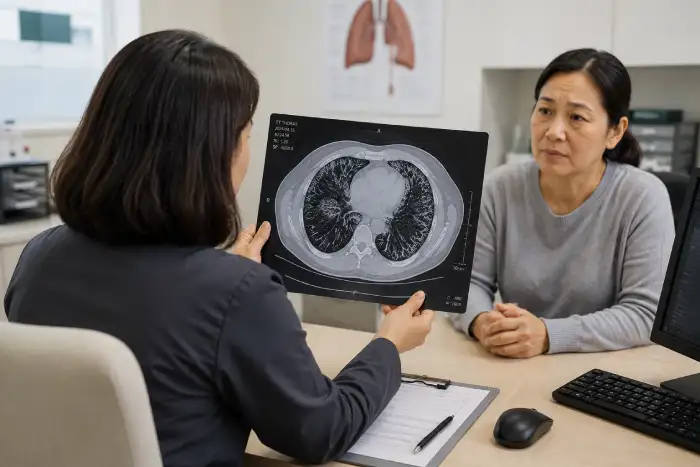
What is CTD-Associated Interstitial Lung Disease?
CTD-Associated Interstitial Lung Disease (CTD-ILD) is a complication of connective tissue diseases (CTDs) like rheumatoid arthritis, systemic lupus erythematosus, scleroderma, and polymyositis/dermatomyositis. In CTD-ILD, the interstitial tissue of the lungs, which supports the alveoli (air sacs), becomes inflamed and scarred. This scarring, known as fibrosis, can impair the lungs’ ability to transfer oxygen into the blood and remove carbon dioxide from it.

Symptoms of CTD-Associated Interstitial Lung Disease
Symptoms of CTD-ILD can vary depending on the severity of the disease and the underlying connective tissue disease.
Common symptoms include:

Respiratory Symptoms
- Shortness of Breath – Difficulty breathing, especially during physical activity.
- Dry Cough – Persistent, non-productive cough.
- Fatigue – Extreme tiredness and lack of energy.
Additional Symptoms
- Chest Pain – Discomfort or pain in the chest area.
- Unintended Weight Loss – Losing weight without trying.
Non-Respiratory Symptoms
- Joint Pain and Swelling – Common in connective tissue diseases like rheumatoid arthritis.
- Muscle Weakness – Particularly in conditions like polymyositis.
- Skin Changes – Thickening and tightening of the skin in scleroderma.

Causes and Risk Factors
CTD-ILD is caused by the underlying connective tissue disease, where the body’s immune system attacks its own tissues, leading to inflammation and scarring. The exact mechanism is not completely understood, but several factors contribute:
Genetic Predisposition
Certain genetic markers may increase the risk of developing CTDs and associated lung disease.
Autoimmunity
The immune system mistakenly attacks healthy tissues, leading to chronic inflammation and fibrosis.
Exposure
Factors such as smoking, infections, and occupational exposures may exacerbate the condition.

Diagnosis
Diagnosing CTD-ILD involves a comprehensive evaluation, including:
Symptom Inquiry
Detailed questions about respiratory and systemic symptoms, duration, and severity.
Lung Assessment
Listening to the lungs for abnormal sounds like crackles.
Joint and Skin Examination
Looking for signs of underlying connective tissue disease.
Blood Tests
To check for markers of inflammation and specific autoantibodies associated with CTDs.
Lung Function Assessment
Measures lung capacity, volume, and gas exchange efficiency.
High-Resolution CT (HRCT) Scan
Provides detailed images of the lungs, showing patterns of inflammation and fibrosis characteristic of ILD.
Tissue Sample
In some cases, a biopsy may be required to confirm the diagnosis and differentiate from other types of ILD.

Treatment Options
The treatment of CTD-ILD aims to control the underlying connective tissue disease, reduce lung inflammation, and manage symptoms. Treatment options include:

Medications
- Corticosteroids – To reduce inflammation.
- Immunosuppressants – Drugs like methotrexate, azathioprine, or mycophenolate mofetil to suppress the immune system.
- Antifibrotic Agents – Medications like nintedanib or pirfenidone to slow the progression of fibrosis.

Pulmonary Rehabilitation
- Exercise Programs – Supervised exercise regimens to improve lung function and overall physical fitness.
- Breathing Exercises – Techniques to enhance breathing efficiency.

Oxygen Therapy
- Supplemental Oxygen – This is for patients with significant oxygen desaturation to improve oxygen levels in the blood.

Lifestyle Modifications
- Smoking Cessation – Quitting smoking to prevent further lung damage.
- Healthy Diet – Eating a balanced diet supports overall health and manages symptoms.

Managing and Living with CTD-Associated Interstitial Lung Disease
Living with CTD-ILD involves a combination of medical treatment, lifestyle changes, and self-care strategies. Here are some tips:
Take medications as your healthcare provider prescribes to control inflammation and prevent disease progression.
Practice stress-reduction techniques such as meditation, deep breathing exercises, and mindfulness to help manage symptoms.
To maintain lung function and overall health, engage in regular, low-impact exercises such as walking, swimming, or gentle yoga.
Regularly visit your healthcare provider to monitor disease activity, adjust treatment as needed, and address any new symptoms or concerns.
Eating a balanced diet rich in fruits, vegetables, whole grains, and lean proteins to support overall health.
CTD-Associated Interstitial Lung Disease is a complex and serious condition that requires comprehensive management. While there is no cure, with early diagnosis and appropriate treatment, many individuals can manage their symptoms and maintain a good quality of life. If you suspect you have CTD-ILD or are experiencing symptoms suggestive of the condition, seek medical evaluation and treatment promptly. By working closely with your healthcare team, adhering to treatment plans, and making healthy lifestyle choices, you can effectively manage CTD-ILD and improve your quality of life.
Seek Coordinated CTD-ILD Care with Dr Anindita Santosa
Breathing changes in someone with a connective tissue disease may signal inflammation or scarring within the lungs. CTD-associated interstitial lung disease can develop gradually, making regular assessment of symptoms, lung function and imaging important for detecting progression. Early recognition allows care to address both the underlying autoimmune condition and its respiratory effects, helping to preserve lung function and daily activity.
At Aaria Rheumatology, management considers the type and activity of your connective tissue disease, the pattern of lung involvement and changes over time. Rheumatologist Dr Anindita Santosa reviews blood tests, lung-function results and HRCT findings to recommend suitable treatment and coordinate further care where needed.
If you have a connective tissue disease and develop persistent breathlessness, a dry cough or unexplained fatigue, contact us today to book an appointment.
